

I first met Sarah Maina at All Saints Community Church. She was calm and quiet, and yet commanded respect. Many people preach with words, while others do so through their actions. Sarah was the latter.
Her commitment to God and serving people was notable. There was a grace about her that couldn’t be ignored. She was someone I’d want in my corner, and I admired her from afar.
One day, as we talked, she let me in on a chapter of her life written during a time when she was most vulnerable.
Sarah shared that she was raising a child on the spectrum. That day, I saw not just her strength, but her brokenness—and her trust in God’s grace.
Her motherhood journey began with pain and grief over what should have been, or anticipatory grief of what will be for her son.
At the time of our interview, God had since changed her story, and she now speaks of His grace that has continued to sustain her in her parenting journey.
This is not a story of perfection. It’s a story of transformation. A mother is refined by God’s love and held together by His grace. This is Sarah’s story—one that will leave you inspired, encouraged, and reminded that grace can still be found even in life’s hardest chapters.
Meet Sarah
Sarah Maina is a wife, a nurse, a mother of two, and a woman of deep faith.
“I was born in Limuru at a place called Githirioni, Lari. My mum was sixteen when she had me,” Sarah tells me. “So I grew up in my grandmother and grandfather’s house. I was more like their daughter than their granddaughter.”
She did well in school and got admitted to Moi University to study education, but her heart was set elsewhere. She had always wanted to be a nurse.
“When they offered me a Bachelor of Education Arts, I didn’t take it. I really wanted to be a nurse,” she tells me. “I tried for so many years to accomplish it, but that dream was not forthcoming.”
Eventually, when nursing school fees proved too high, Sarah settled for a diploma in community development instead.
Soon after completing her diploma, Sarah got married. She and her husband, Anthony, have now been together for seventeen years. They have two children: Jeremy, who is fifteen, and Joanna, who is nine.
The dream of becoming a nurse stayed with her, even as life took a different direction. It was her husband who kept praying and encouraging her that one day, she would go back and pursue it.
“Even before we got married, he was praying that I would become a nurse,” she recalls. “And after we had our son, he kept praying and encouraging that dream.”
Sarah didn’t see how that dream could be realized. Nursing school in Kenya was expensive, and their family was already stretched. “We were living paycheck to paycheck,” she says. “Sometimes, we didn’t even have fare to go to work.”
In 2011, Sarah’s family relocated to the United States. Two years later, she enrolled in nursing school with the support of her husband.
By 2013, she had begun studying for her practical nursing license, later earning both her RN and BSN. It was the dream she had almost given up on, but someone, her husband, Anthony, in this case, had believed in her.
“Every dream you have is valid,” Sarah says, and it’s clear just how profound this moment was for her life. “Sometimes it may not look like it’s going to happen, but God is concerned with every detail of our lives. If we put our dreams and vision in God’s hands, He can bring them to fruition through grace.”
Grace in the Unexpected Journey of Motherhood
Her Story As A Mother, However, Was Just Beginning To Unfold In Ways She Never Expected.
Sarah had given birth to her first child, Jeremy, while still in Kenya. Like many new mothers, she had a lot of hopes and dreams for who her son would become.
“You have all these dreams and visions. You imagine the things your kid will be able to do. And then they’re born, and the possibilities feel endless.”
Jeremy was a quiet baby. A few months in, Sarah started to notice a few worrying things. At around six to seven months, she realized Jeremy couldn’t sit upright for long without support.
She took him to the pediatrician, who reassured her that there was nothing to worry about. The pediatrician encouraged her to place Jeremy on the floor with toys, and within two weeks, Jeremy was sitting up on his own.
Jeremy also didn’t take his first steps until around seventeen or eighteen months. However, Sarah didn’t see it as something to worry about much. Children develop at their own pace, after all. And by then, life was already moving again because they relocated to the US in 2011.
Jeremy was just under two years old when they arrived in the US. At their first pediatric appointment shortly after his second birthday, Sarah filled out some routine developmental forms. When the doctor finished reviewing them, he delivered news that would change everything: the doctor suspected Jeremy had autism.
It was the first time Sarah had heard the word autism. She went home and started doing research.
“I read everything I could find, and what I found was so disheartening.” Article after article described limitations, challenges, and an uncertain future. She felt as if with each piece of information she gathered, another door was closing on the dreams she’d held for her son.
On the upside, Massachusetts’s healthcare system moved quickly. Within two weeks, Jeremy had begun speech therapy in their home. Her emotions, however, moved at a different pace entirely. She watched as other children Jeremy’s age started to speak, run, and engage with the world around them.
Jeremy, however, remained silent.
Despite the interventions and her efforts at home, Jeremy showed little progress. By the time he entered the school system at age three, he still could not speak.
That’s when the comments started. Some people suggested Sarah wasn’t doing enough, while others implied she wasn’t talking to him enough at home.
The blame felt crushing, especially since she knew how hard she was working to help her son meet her milestones, and yet nothing seemed to make a difference.
“We were new in the country, trying to settle. We had this diagnosis, and we weren’t seeing progress. I was reading all these things online, and it felt like there was no future for my baby.”
The weight of it all hit her harder than she expected. By the time Jeremy was three or four years old, Sarah was in what she now recognizes as a severe depression, though she didn’t understand it at the time.
It wasn’t until she joined nursing school and studied depression that she began to see the signs in herself.
“Every symptom they listed, I had it,” she says. “I was sleeping like crazy. Jeremy and I would eat, sleep, and cry. That was it. Eat, cry, and sleep.”
Sarah began to question her faith because she felt abandoned by the God she had served for years.
“I felt like I did my part. I was faithful. I did what I’m supposed to do as a Christian. And now this is what God does. This is how he repays me.”
She watched other families with children and wondered why she was being punished while others seemed blessed.
She continued going to church, but faith and hope were drowned in how bleak her and her son’s future looked.
“I would look at people praying, and I’d be like, do they know that He doesn’t hear? He doesn’t answer? He doesn’t care?”
The isolation didn’t help her situation either.
Her husband was working two and sometimes three jobs, trying to settle their family in a new country. He was rarely home, and when he was, he was exhausted.
“He would come home and eat, then sleep, wake up, and then go back to work in just a few hours,” Sarah says. “I didn’t share my thoughts so much with him.”
She also felt like he was carrying too much already; the pressure to provide, trying to settle his family, in addition to processing his own reaction to Jeremy’s diagnosis.
In general, Sarah didn’t have actual support. She was in a new country and had not established any solid friendships. “I was just there by myself, battling everything and trying to process everything by myself.”
She didn’t share with family back in Kenya either. She knew what their response would be.
“I knew how such things are viewed back home,” Sarah tells me. “I knew the suggestions they would be making, the comments they would be making, and I knew it would break my heart even more.”
Sarah felt that God and everyone else had turned against her. She was drowning in anger, frustration, and what she calls “a lot of self-pity.”
“I would look at my son, and pity would come, and then I’m crying and wondering what his life is going to be, wondering how my life is going to be.”
Rekindling Grace in Faith
It Wasn’t One Single Moment That Turned Things Around For Sarah.
About a year after Jeremy’s diagnosis, Sarah was working in a group home. She had just moved from one facility to another when she met a woman named Agnes who would, without knowing it, help rekindle Sarah’s faith.
Once the group home residents had gone to bed, the two caregivers would sit and talk.
“Agnes was a woman of God,” Sarah remembers. “All she would talk about was the love and goodness and grace of God. Every day!”
At first, Sarah just listened. She wasn’t sure what to do with it, but the woman kept talking about God’s presence, even in pain, and His care, even in silence.
Sometimes they would sing, and other times, Agnes shared her own hardships and losses that should have broken her faith, not strengthened it. Sarah couldn’t understand the disconnect.
“I kept thinking, how do you continue trusting God like this? After everything?”
But the consistency of those evening shifts, the way the woman showed up, spoke life, and sang songs of faith, began to wear down the walls Sarah had built around her heart. Slowly, the anger and bitterness began to lift.
“I started putting prayer back into my routine,” Sarah shares. “And then, the next thing you know, the depression is gone.”
Her son’s diagnosis hadn’t changed. The challenges were still there, but her perspective was changing from fear and uncertainty to hope and faith.
What she heard from Agnes in those quiet evening hours helped her begin to believe again. She started believing that God had not turned his back on her and that her son’s future wasn’t something to grieve, but something to entrust to God.
Even when Sarah found out that her second-born baby girl, Joana, was also on the Autism spectrum, she was able to move through life with more faith, hope and grace than when she had first received a diagnosis about Jeremy.
“I was kind of prepared,” she says. “Was I disappointed that you know it turned out that way? Yes, but it didn’t hit me the way it hit me with our firstborn.”
A Different Kind of Future
Sarah knows what it’s like to feel like every dream for your child has been shattered.
“When you first hear the news, you feel like all the dreams and all the visions that you’ve ever had for your kid are wasted, and are not going to be realized.”
But she’s come to learn something important: those dreams weren’t wasted, they’re just different.
“Just because we may never get to realize them doesn’t mean that there aren’t other things that we can do and realize with our children,” she says. “We focus so much on what we seem to have lost, or what we feel like our children will miss out on, that we fail to focus on the things that they can get to do, the things that they can get to experience, and the things that we, as parents, can get to do with them and experience with them.”
“It requires courage,” she tells me, “to let go of one vision and trust God to show you another.”
She’s also learned to resist the blame that others try to place on parents of special needs children.
“Will there be people who will try to put the blame on you? Yeah, a lot of them. But the worst thing you can do is blame yourself for your child being this way.”
Sarah pushes back against the idea that parents of special needs children somehow love differently or work harder than other parents.
“People think that parents with special needs kids have to bear more, but the same care and concern you have for your child is the same care and concern I have for mine. It only looks different.”
Parenting, she’s realized, is inherently challenging for everyone. The difference is in how those challenges appear.
“I haven’t met a parent who doesn’t feel the burden of parenthood, of motherhood, or fatherhood. It only just feels a little bit different.”
Even If Nothing Changes
Perhaps the most monumental transformation in Sarah’s story has been learning to trust God even when prayers seem unanswered. She references the story of Habakkuk about trusting God even when the fig tree doesn’t blossom.
“You should be able to get to that point where you’re saying, ‘even if I don’t get anything out of it, I will still trust.’” She adds, “God is good whether your situation changes or whether your situation doesn’t change. His love and grace is constant. It’s not like when he’s answering those prayers is when his full love is on display, and when the prayers are not being answered, then he’s silent.”
In that realization, she found grace, the kind that allows you to live in tension between hope and acceptance.
She’s seen this play out in her own life. For years, she and her husband worked on toilet training Jeremy, spending hours on the potty with little progress.
“I remember asking myself one day, is this how it’s going to be, even when he’s in his twenties? Because we were in the 8th year and he was still in diapers.”
Then one day, Jeremy woke up and used the bathroom on his own. He never went back to diapers.
That moment taught me that even when it looks like God is not doing anything, He is still in the background working—His grace often unfolds in quiet, unseen ways.
A Church That Became Home
One of those unexpected wins came when the family moved to Missouri. Sarah was hesitant about finding a new church community. She was unsure how they would receive a family with special needs children.
“I was worried about how people would react to Jeremy’s needs and his differences,” she recalls.
But the church they found welcomed them completely. Members learned to communicate with the children, included them in activities, and treated the family as a blessing.
Related: From Brokenness to Purpose: Caroline Kagia’s 20-Years Struggle With Addiction
“I got a community where I can sit in church and listen to a sermon without having to wonder where my kid is, because a church member has volunteered to watch over my kids. I feel so supported and covered in grace.”
Sarah Maina
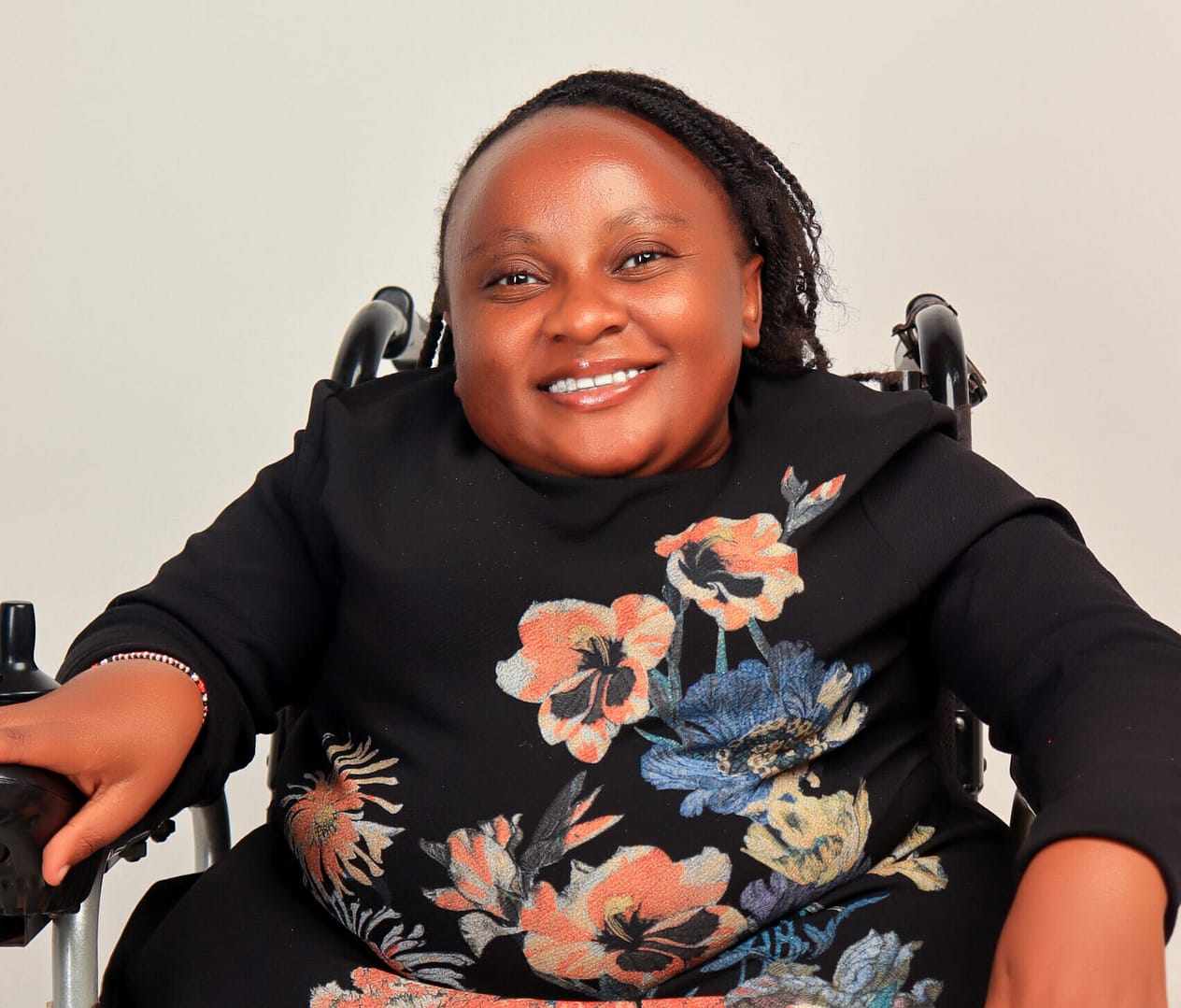
Sarah Maina is a registered nurse (RN, BSN) specializing in mental health pediatric nursing. She is a mother of two children on the autism spectrum and advocates for families with special needs through a faith-based approach to parenting. You can find her at Of Life and Health.



I have read this with tears flowing from my eyes.Sarah’s story sounds like mine at some point especially the part which she felt like God has abandoned her even though she was faithful to him.
Ibam encouraged to keep hope alive for daughter who has cerebral palsy. I believe some day, all these will make sense.
Thank you Monica! Sarah’s story is really inspiring. I hope that the same grace that helped her keep hope & faith alive carries you too even as you care for your daughter.
It’s okay to cry, and thank you for your vulnerability. more grace